What Are the Top Carton Sealer Manufacturers in China?

Time:2026-09-21 Author:Charlotte
0%

Choosing among China’s top Carton Sealer manufacturers requires more than comparing prices or browsing polished product pages. A dependable supplier should demonstrate manufacturing experience, stable quality control, and practical knowledge of packaging operations. This introduction examines manufacturers that serve warehouses, factories, logistics centers, and growing e-commerce businesses.

The evaluation considers machine performance, sealing consistency, construction quality, and production capacity. It also reviews company history, export experience, technical support, spare-parts availability, and customization options. A reliable Carton Sealer should handle different carton sizes without constant adjustment. Its tape or adhesive system should remain steady during long shifts. Operators should also find the controls clear and safe.

Factory evidence matters. Look for documented inspections, visible assembly areas, testing procedures, and responsive communication. Certifications can support credibility, but they should not replace independent verification. Customer feedback may reveal details that brochures overlook, such as noisy conveyors, delayed parts, or difficult installation. Those details matter.

No list is perfect. Manufacturer rankings can change as technology, service, and market conditions develop. Some companies appear impressive online but provide limited after-sales support. Others may have modest websites yet produce durable machines. That difference deserves attention. The discussion ahead presents leading Chinese manufacturers through a practical, evidence-based lens. It aims to help buyers compare suppliers fairly, ask better questions, and identify equipment that fits their actual packaging workflow. Before placing an order, request samples, confirm specifications, and clarify warranty terms. A careful decision today can prevent costly downtime later.
What Are the Top Carton Sealer Manufacturers in China?

What Is a Carton Sealer and How Does It Work?

What Are the Top Carton Sealer Manufacturers in China?

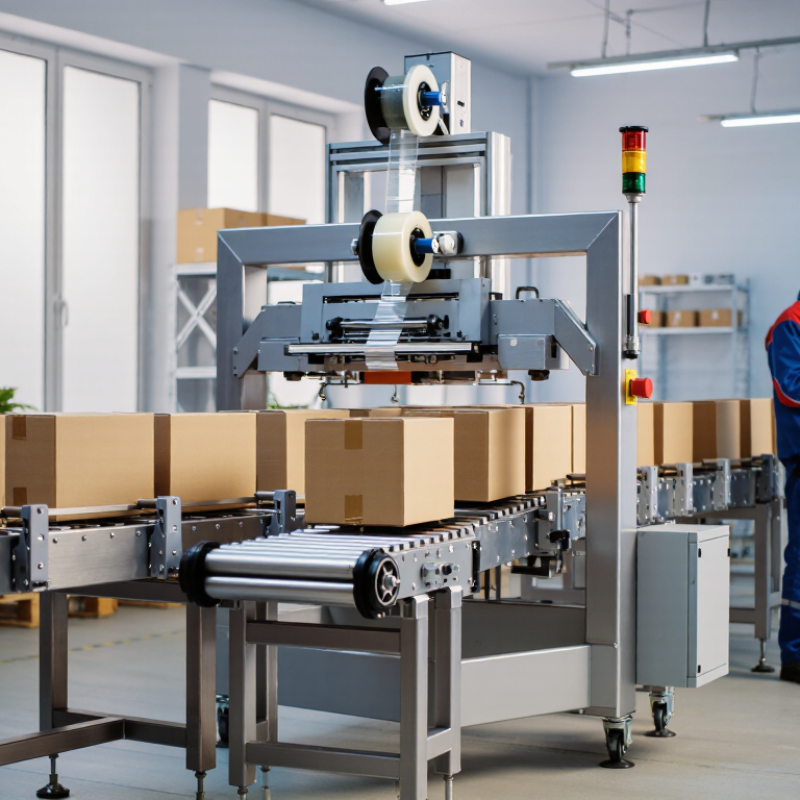
A carton sealer closes filled boxes with tape, hot-melt adhesive, or both. Its job sounds simple. It is not. A typical machine aligns each carton, folds the top flaps, applies sealing material, and presses the joint firmly. Sensors detect height, position, and carton movement. Conveyor belts then carry the sealed box toward palletizing or shipping.

A stable machine prevents crooked seals and crushed corners. In practical line trials, poor flap alignment often causes tape wrinkles, open cartons, and unnecessary rework. According to PMMI’s 2023 packaging machinery data, the U.S. packaging machinery market reached about 10.2 billion dollars, showing strong demand for automated packing equipment. The report also highlights labor shortages as an important automation driver. That pressure makes reliable carton sealing more valuable.

When evaluating Chinese manufacturers, buyers should inspect frame rigidity, motor quality, sealing-speed control, and spare-parts access. Machine adaptability matters too. Some lines handle only one carton size, while better systems adjust quickly through handwheels or servo controls. Smithers’ packaging outlook reports continued growth in e-commerce packaging, where consistent box closure supports transport protection. Still, published specifications can look better than factory performance. Ask for sample testing with your actual cartons, tape, and operating speed. A small detail, but often decisive. Supplier audits, clear manuals, and responsive technical support deserve equal attention.

What Is a Carton Sealer and How Does It Work?

A carton sealer closes and seals corrugated boxes using adhesive tape or hot-melt glue. Typical throughput increases from manual systems to fully automatic and random-case sealing lines.

The figures show typical throughput ranges used in packaging operations. Actual performance depends on carton size, sealing method, operator workflow, and line configuration.

Which Types of Carton Sealers Are Made in China?

Chinese carton sealer manufacturers produce several machine types for different packaging conditions. Semi-automatic side-belt sealers suit small warehouses and changing carton sizes. Operators fold the flaps, then guide each box through the machine. They are simple, affordable, and easy to maintain. These machines often use pressure-sensitive tape.

Fully automatic top-and-bottom sealers work well on steady production lines. They fold flaps, apply tape, and adjust carton width automatically. Random carton sealers handle mixed box sizes without frequent manual changes. This matters for e-commerce warehouses, where cartons rarely follow one standard. Some models use hot-melt adhesive instead of tape. They create a clean seal and perform well on dusty corrugated surfaces, but glue temperature needs careful control.

Chinese factories also make four-corner and six-corner sealers for heavier or taller cartons. Side-belt systems offer stable movement, while top-belt systems press uneven flaps more firmly. Stainless-steel frames are common in food-related packaging areas, although frame material alone does not prove hygiene quality. During equipment checks, I examine belt alignment, sensor response, emergency stops, and spare-part access. A listed carton range is not enough. Real cartons may bend, vary in moisture, or contain uneven loads. I once underestimated that difference; a machine passed a dry test but struggled with soft boxes. Factory trials with actual cartons are essential.

Who Are the Leading Carton Sealer Manufacturers in China?

China’s leading carton sealer manufacturers are usually identified by engineering depth, export records, and after-sales performance. They serve corrugated-box plants, food processors, electronics suppliers, and logistics warehouses. The strongest suppliers typically offer automatic, semi-automatic, and customized sealing lines. Their equipment often supports adjustable carton sizes, hot-melt or pressure-sensitive tape, stainless-steel frames, and PLC-based controls.

MarketsandMarkets estimates that the global packaging machinery market will grow from about USD 58.8 billion in 2023 to USD 73.3 billion by 2028. This growth increases demand for reliable Chinese equipment. Industry leaders respond with faster changeovers, lower compressed-air consumption, and remote troubleshooting. PMMI reports that labor shortages remain a major packaging concern, making simple controls and stable automation valuable. Still, catalog claims can look better than factory reality. Buyers should verify running footage, noise levels, sealing accuracy, and spare-parts delivery.

Tips: Request a sample test using your own cartons and tape. Check whether the manufacturer provides wiring diagrams, English manuals, training, and preventive-maintenance schedules. Ask for references from similar industries, not only general export figures. A low purchase price may hide weak sensors or difficult format adjustments. Factory audits also matter. Look at assembly records, inspection tools, and software revision control. These details often separate a dependable supplier from a merely capable one.

How Do Chinese Carton Sealer Manufacturers Compare?

Chinese carton sealer manufacturers vary widely, so comparing them requires more than checking catalog prices. Established factories often combine case sealing lines, stainless-steel frames, servo controls, and adjustable guides. Smaller workshops may offer faster customization, but their documentation can be uneven. In practical sourcing, I would inspect a machine sealing cartons similar to those used in production. Watch the flap alignment, tape tension, and motor noise. Small details reveal more than polished photographs.

Compared with many overseas suppliers, Chinese manufacturers commonly provide broader configuration choices and shorter engineering cycles. They can adapt conveyor height, carton size ranges, voltage, and sealing methods for different packing rooms. Cost is often competitive because components and assembly are sourced locally. However, a low quotation may exclude spare parts, installation support, or performance testing. Reliable suppliers explain these limits in writing. Ask for factory acceptance records, electrical diagrams, material specifications, and a video of continuous operation. One test is not enough.

Quality control also differs from factory to factory. Look for incoming component checks, sample sealing tests, and traceable serial records. Export experience helps, but it does not guarantee consistent service. Response time matters when a belt slips during a busy shift. I have seen machines work well during demonstrations yet struggle with dusty cartons and uneven flaps. That gap deserves attention. A careful buyer should request trial cartons, define acceptance criteria, and leave room for honest technical revisions.

How Should Buyers Choose a Chinese Carton Sealer Manufacturer?

Choosing a Chinese carton sealer manufacturer should begin with your cartons, not a polished catalog. Measure box length, width, height, board strength, tape type, and daily volume. A reliable supplier should explain whether its machine suits these conditions. Ask for a video test using your cartons. Better still, send sample boxes for a live factory trial.

Examine manufacturing experience through specific evidence. Request machine drawings, electrical layouts, component specifications, and quality inspection records. Check whether the manufacturer builds key parts in-house or relies heavily on outside workshops. This detail affects consistency and repair speed. Ask about sealing speed, adjustment range, noise, safety guards, and energy use. Do not accept vague claims.

Look beyond the purchase price. Compare installation training, spare-part availability, response times, warranty limits, and remote troubleshooting. Ask for references from buyers with similar packaging lines. A serious manufacturer can describe common failures and their solutions. That honesty matters. Some suppliers may offer impressive automation but weak after-sales support. That risk is easy to overlook. I would also request a written acceptance standard, including seal strength and operating stability. One practical concern remains: factory promises can change after payment. Independent inspection and staged approval may reduce that uncertainty. A careful buyer should leave room for questions, revisions, and an uncomfortable second review.

What Are the Top Carton Sealer Manufacturers in China? - How Should Buyers Choose a Chinese Carton Sealer Manufacturer?

Buyer Evaluation Matrix for Chinese Carton Sealer Manufacturers

Evaluation Dimension Recommended Weight Realistic Technical or Commercial Reference Evidence Buyers Should Request Key Selection Advice
Application Fit 20% Carton sealers are commonly configured as uniform-case, random-case, top-and-bottom belt, or side-belt machines. Carton drawings Product samples Application video Select the machine according to the carton size range, product weight, carton material, and required sealing pattern rather than choosing only by price.
Carton Size Range 15% Semi-automatic and automatic models have different minimum and maximum carton dimensions. The usable range depends on the frame, guide rails, and adjustment system. Minimum carton size Maximum carton size Adjustment diagram Ask the manufacturer to test the smallest and largest cartons used in actual production, including cartons with dimensional variation.
Throughput and Line Integration 15% Typical carton-sealing quotations may specify output in cartons per minute. Actual output is affected by carton dimensions, operator loading, product stability, and upstream conveyor speed. Rated speed Continuous test video Line layout Compare guaranteed throughput under your carton conditions, not the unloaded maximum speed shown in a catalog.
Tape Compatibility 10% BOPP carton-sealing tape is widely used in 48 mm, 60 mm, and 75 mm widths. Tape width, roll diameter, core size, and adhesive performance must match the sealing head. Supported tape widths Core specification Tape test report Confirm compatibility with the tape grade used in the destination market, especially for recycled or low-temperature cartons.
Machine Construction 10% Important construction factors include welded or modular frames, adjustable guide rails, belt material, sealing-head design, guarding, and access to wear parts. Material list Assembly photos Spare-parts list Give preference to designs that permit quick belt, roller, cutter, and tape-head replacement without extensive disassembly.
Electrical Compatibility 8% China commonly uses 220 V single-phase and 380 V three-phase, 50 Hz power supplies. Export destinations may require different voltage, frequency, plug, or control-panel arrangements. Electrical schematic Motor data Voltage confirmation Specify the destination-country electrical requirements in the purchase contract and verify them during factory acceptance testing.
Safety and Compliance 8% For European sales, machinery generally requires applicable technical documentation, risk assessment, instructions, and a Declaration of Conformity before CE marking is used. Risk assessment Declaration of Conformity User manual Guarding photos Do not treat a CE logo alone as proof of compliance. Check whether the documentation matches the exact machine model and configuration.
Quality Management 5% ISO 9001:2015 certification can indicate that a quality-management system has been established, but it does not guarantee that every machine will meet the buyer’s requirements. Valid certificate Certification scope Inspection records Verify the certificate issuer, validity period, factory address, and scope. Combine certification review with product testing.
Factory Verification 4% A reliable evaluation should distinguish between a manufacturer, an integrator, and a trading company. Business license Factory video tour Live video inspection Export records Confirm production capability, engineering resources, testing equipment, and the identity of the contracting entity before payment.
After-Sales Support 3% Useful support provisions include installation guidance, remote troubleshooting, operating manuals, electrical diagrams, spare-parts availability, and technician response procedures. Warranty terms Response time Spare-parts quotation Require the warranty duration, exclusions, service response time, and replacement-parts process to be written into the quotation or contract.
Total Cost of Ownership 2% The purchase price is only one cost. Buyers should also consider freight, installation, electricity, tape consumption, maintenance, spare parts, downtime, and operator training. Complete quotation Packing list Maintenance schedule Compare suppliers using the same technical specification and calculate operating costs over the expected service period.
Recommended purchasing process: Prepare carton samples and drawings, request comparable technical quotations, conduct a documented factory or video audit, complete a Factory Acceptance Test, and approve shipment only after the agreed performance criteria are met.

FAQS

What is a carton sealer?

A carton sealer closes filled boxes with tape, adhesive, or both. It aligns cartons, folds flaps, applies sealing material, and presses the joint. Conveyor belts move sealed boxes toward shipping or palletizing. Small details matter.

How does a carton sealer operate?

Sensors detect carton height, position, and movement. Belts guide the box through the sealing area. The machine folds the flaps and applies tape or hot-melt adhesive. Pressure rollers help create a firm closure.

Which carton sealer types are commonly made in China?

Common types include semi-automatic, fully automatic, random-size, four-corner, and six-corner sealers. Side-belt models suit changing carton sizes and smaller warehouses. Top-and-bottom models support steady production lines. Some machines use hot-melt adhesive.

When should a buyer choose a random carton sealer?

Choose one when carton sizes change frequently. This suits e-commerce warehouses with mixed orders. Operators avoid repeated manual adjustments. It saves time.

What sealing material can these machines use?

Machines commonly use pressure-sensitive tape or hot-melt adhesive. Tape systems are simple and easier to inspect. Hot-melt systems can seal dusty corrugated surfaces effectively. Glue temperature requires careful control.

What features should buyers inspect before purchasing?

Check frame rigidity, motor quality, belt alignment, and sensor response. Inspect emergency stops, sealing-speed controls, and adjustment methods. Servo controls usually support faster format changes. Do not trust specifications alone.

Why is sample testing with real cartons important?

Real cartons may bend, hold uneven loads, or contain moisture. A machine can pass a dry test yet struggle with soft boxes. Test your cartons, tape, and operating speed at the factory. I underestimated this once.

How can buyers evaluate a reliable manufacturer?

Review export experience, engineering capability, factory records, and service responsiveness. Request English manuals, wiring diagrams, training, and maintenance schedules. Ask for references from similar industries. Check spare-parts delivery times.

What problems can poor carton alignment cause?

Poor alignment may create tape wrinkles, open cartons, or crushed corners. Uneven flaps can reduce sealing strength. Operators may need repeated rework. That becomes expensive quickly.

Conclusion

A Carton Sealer is a packaging machine designed to close and secure cardboard boxes efficiently, typically by applying adhesive tape, hot melt glue, or other sealing materials. Chinese manufacturers produce a wide range of models, including manual, semi-automatic, and fully automatic machines, as well as side-belt, top-and-bottom, random-size, and customized systems. These options can serve different carton dimensions, production speeds, and packaging environments.

When comparing Chinese Carton Sealer manufacturers, buyers should evaluate machine construction, sealing consistency, adjustment flexibility, automation capabilities, energy efficiency, quality control, and after-sales support. A suitable supplier should provide clear technical specifications, stable production capacity, customization services, spare parts availability, and responsive communication. Buyers should also request samples, verify testing procedures, review warranty terms, and confirm whether the equipment integrates smoothly with existing conveyor or packaging lines. Careful comparison helps businesses select a reliable solution that balances performance, durability, maintenance requirements, and total operating cost.


Charlotte

Charlotte

Charlotte is a seasoned marketing professional with a deep understanding of the company's portfolio and a passion for elevating its presence in the market. With a keen eye for detail and a commitment to excellence, she ensures that our professional blog is regularly updated with insightful articles......