China Top Box Tape Machine Manufacturers for Global Buyers
Global packaging is becoming faster, more automated, and more demanding. Smithers’ report, The Future of Global Packaging to 2028, identifies e-commerce, labor pressure, and sustainability as major market forces. PMMI’s 2024 State of the Industry report also highlights continued investment in packaging machinery, especially where manufacturers need stable output and fewer manual tasks.
This is where a reliable Box Tape Machine becomes practical. A modern carton sealer can handle different box heights, adjust tape tension, and maintain consistent sealing at the end of a busy packing line. Small details matter. A weak side belt may damage cartons. Poor sensor calibration can create stoppages. China’s leading manufacturers increasingly respond with servo drives, stainless-steel frames, remote diagnostics, and customized conveyor layouts.
“Packaging automation must solve a real production problem, not merely add technology,” says Jorge Izquierdo, Vice President of Market Development at PMMI. His point deserves attention. Some buyers still compare machines by speed alone. That approach is incomplete. Total cost, spare-parts access, operator training, safety design, and after-sales support can decide long-term value.
Global buyers should examine factory testing records, sealing accuracy, electrical standards, and documented performance under real carton conditions. Ask for evidence. Request sample runs with your own boxes and tape. A machine that works perfectly in a showroom may behave differently with recycled cartons, dusty surfaces, or uneven packing.
This guide evaluates China’s top Box Tape Machine manufacturers through engineering capability, customization, export experience, quality control, and service reliability. The rankings may not fit every buyer. That is worth remembering.
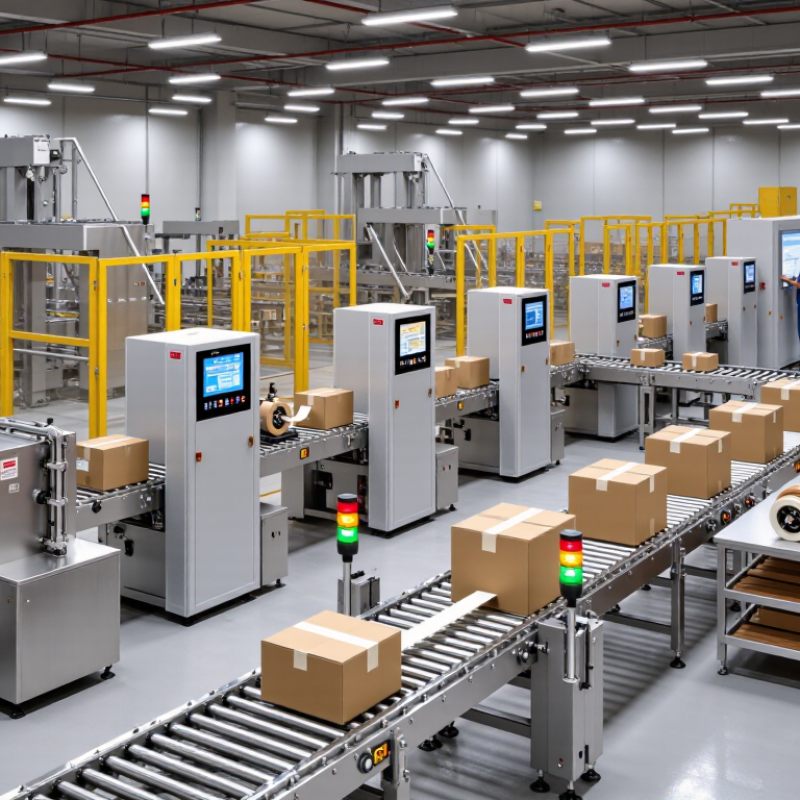
Understanding Box Tape Machines and Their Industrial Applications
China Top Box Tape Machine Manufacturers for Global Buyers
Understanding Box Tape Machines and Their Industrial Applications
A box tape machine seals corrugated cartons with pressure-sensitive tape. It usually combines conveyors, adjustable guides, tape heads, and drive motors. Semi-automatic models need an operator to position each carton. Automatic units detect carton height and seal continuously. The right choice depends on box dimensions, production speed, tape width, and daily workload. Small details matter. A stable tape head prevents loose edges and crooked seals.
These machines serve warehouses, e-commerce packing lines, food packaging, and general manufacturing. In plant trials, operators should inspect sealing quality at different carton heights. They should also test recycled cardboard, which can have rough surfaces and weaker compression strength. A fast machine is not always better. Excessive speed may cause jams, uneven pressure, or wasted tape. Keep it practical. Buyers evaluating Chinese manufacturers should request sample tests, operating videos, safety documents, spare-parts information, and clear warranty terms. Electrical requirements must match the destination facility. Guarding, emergency stops, and accessible controls deserve careful review. Service response also matters when a conveyor sensor fails during a busy shift. Some specifications look impressive on paper but perform poorly with dusty cartons or frequent size changes. That is worth questioning. Reliable manufacturers explain machine limits, recommend suitable configurations, and provide manuals that technicians can actually use.
Key Criteria for Evaluating Chinese Box Tape Machine Manufacturers
For global buyers, evaluating Chinese box tape machine manufacturers requires more than comparing prices. Smithers’ The Future of Global Packaging to 2029 values the worldwide packaging market at about US$1.3 trillion by 2029. This growth increases pressure on factories to deliver stable, faster case sealing. A capable manufacturer should provide tested machines, clear specifications, and traceable quality records.
Ask for measurable evidence. Check sealing speed, carton-size range, tape-width tolerance, noise level, and compressed-air consumption. Request videos from a real production line, not only polished demonstrations. PMMI’s 2024 State of the Industry report highlights continued investment in automation and labor-saving equipment. Therefore, buyers should examine changeover time and fault recovery, not just maximum cartons per minute.
Documentation matters. The supplier should provide electrical diagrams, spare-parts lists, inspection reports, and installation procedures in accurate English. Confirm whether critical components are commercially available in your region. Factory experience helps here, but it is not proof of reliability. Audit welding quality, guarding, conveyor alignment, and operator access before payment. Small details matter.
A practical factory trial is essential. Test different carton heights, recycled board, and uneven packing conditions. Ask for performance data after continuous operation, such as four to eight hours. Some suppliers may avoid this request. That is a warning sign. Buyers should also review warranty terms, remote support response times, and technician availability. Reported figures can look impressive, yet real-world results may differ. A cautious evaluation leaves room for that uncomfortable possibility.
Leading Manufacturer Profiles and Product Capabilities in China
China’s box tape machine manufacturers serve a packaging market shaped by speed, labor shortages, and online retail. PMMI’s 2024 State of the Industry report identifies automation and workforce challenges as major machinery investment drivers. Smithers also forecasts the global packaging market will exceed US$1.2 trillion by 2028. These figures explain growing interest in Chinese suppliers with export-ready equipment and flexible production lines.
Leading Chinese manufacturers generally fall into three profiles. Standard-line builders focus on reliable semi-automatic carton sealers for warehouses and small factories. Advanced integrators combine case forming, filling, weighing, and top-and-bottom sealing. Custom engineering companies develop servo-controlled systems for irregular cartons, high-speed conveyors, and synchronized labeling. Typical capabilities include PLC controls, photoelectric sensors, adjustable guide rails, and tape-width options. A good factory should provide recorded factory acceptance tests, wiring diagrams, spare-parts lists, and operator training. Details matter.
In practical evaluations, buyers should inspect tape tension at the carton corners. Uneven pressure can leave lifted edges after transport. Ask for production videos using similar box dimensions, not only polished demonstrations. ISO-based quality procedures can support consistency, but certification alone proves little. I have found that response speed often reveals more than a brochure. Some suppliers offer impressive customization yet underestimate installation conditions, voltage differences, or maintenance skills. That weakness deserves honest discussion. Experienced manufacturers should explain these limits before signing an order.
China Top Box Tape Machine Manufacturers for Global Buyers - Leading Manufacturer Profiles and Product Capabilities in China
| Manufacturer Profile |
Primary Machine Type |
Box Format |
Typical Conveyor Speed |
Tape Compatibility |
Adjustment Method |
Recommended Applications |
Export-Oriented Features |
| Profile A: Standard Case-Sealing Specialist |
Automatic top and bottom case sealer |
Uniform regular-slotted cartons |
Approximately 18–25 cases/minute |
BOPP or kraft carton-sealing tape |
Manual handwheel adjustment |
General packaging, warehousing, and distribution |
Modular construction, voltage customization, replaceable wear parts |
| Profile B: High-Throughput Packaging Builder |
Automatic side-belt or top-and-bottom belt sealer |
Regular cases with consistent dimensions |
Approximately 20–30 cases/minute |
Common pressure-sensitive carton tapes |
Tool-free or quick-change guides on selected configurations |
Food, beverage, household goods, and consumer products |
Line-integration options, emergency stop circuits, adjustable working height |
| Profile C: Heavy-Duty Industrial Manufacturer |
Reinforced automatic case sealer |
Large or heavier corrugated cases |
Approximately 8–15 cases/minute |
Wide and reinforced carton-sealing tape formats |
Handwheel adjustment with reinforced guide assemblies |
Industrial components, machinery parts, and bulk shipments |
Heavy-duty frame, high-load conveyor, safety guarding, serviceable components |
| Profile D: Compact-Line Equipment Supplier |
Semi-automatic top-and-bottom case sealer |
Mixed carton sizes with operator loading |
Approximately 8–12 cases/minute |
Standard carton-sealing tape rolls |
Manual carton-width and height adjustment |
Small and medium-sized businesses, e-commerce fulfillment |
Compact footprint, lower initial investment, simple operator training |
| Profile E: Customized Automation Integrator |
Configured case-sealing system for production lines |
Standard or application-specific carton formats |
Project-dependent; commonly up to approximately 30 cases/minute |
Tape width and roll specifications selected by application |
Manual, pneumatic, or servo-assisted adjustment |
Automated factories, contract packaging, and integrated logistics lines |
PLC control, sensor interfaces, conveyor integration, factory acceptance testing |
| Profile F: OEM and Private-Label Manufacturer |
Standard and customized carton-taping machines |
Regular cases across multiple dimensions |
Model-dependent; commonly 10–25 cases/minute |
Pressure-sensitive packaging tapes specified by buyer |
Configuration depends on order specifications |
Distributors, system resellers, and international packaging projects |
Custom documentation, multilingual manuals, spare-parts support, export packing |
Note: Performance ranges are indicative industry-level specifications and should be confirmed against the selected machine configuration, carton dimensions, tape format, and production conditions.
Quality Standards, Customization, and Export Support for Global Buyers
China Top Box Tape Machine Manufacturers for Global Buyers
For global buyers, a reliable box tape machine starts with measurable quality standards. Experienced manufacturers should provide testing records for sealing speed, tape tension, carton size range, and motor stability. Ask for sample cartons sealed under real production conditions. A clean 48 mm tape line and steady pressure matter more than attractive brochures. Electrical parts must match the destination market’s voltage, frequency, and safety requirements. Documentation should include manuals, inspection reports, spare-part lists, and clear warranty terms. This is basic, but it is often missed.
Customization can improve productivity when it solves a specific factory problem. Buyers may request conveyor height changes, adjustable carton guides, different sealing heads, or interface language options. A practical manufacturer will confirm drawings, tolerances, and testing responsibilities before production. Export support should cover secure packing, loading photos, shipping documents, installation guidance, and responsive technical communication. Small details matter. A damaged guide rail can delay an entire line.
Tips: Send carton samples, tape specifications, power data, and production targets before requesting a quotation. Compare test videos with written performance data. Do not judge quality from price alone. Factory visits or live video inspections can reveal working conditions and final inspection habits. No supplier gets every detail right, and buyers should challenge unclear claims. Sometimes, our own requirements are incomplete. That deserves honest review before signing an order.
How to Select and Purchase the Right Box Tape Machine from China
China Top Box Tape Machine Manufacturers for Global Buyers
How to Select and Purchase the Right Box Tape Machine from China
Choosing a box tape machine starts with the carton, not the supplier’s catalog. Measure carton length, width, height, weight, and sealing tape size. Record the smallest and largest boxes used on your line. A machine that handles one carton perfectly may jam on another.
Ask manufacturers for running videos and a sample test with your actual cartons. Check conveyor height, sealing speed, adjustment time, noise, and tape alignment. Important details matter. Inspect the frame, cutting blade, motors, sensors, and electrical cabinet. Request drawings, manuals, spare-parts lists, and a clear warranty. I once saw a low-priced machine fail because its replacement blade was difficult to source. The purchase price was not the real cost.
Before payment, verify production capacity, quality procedures, export experience, and inspection records. A video call can reveal whether the factory understands your packaging process. Confirm voltage, plug type, packaging method, delivery terms, installation support, and response times in writing. Use a pre-shipment inspection with agreed acceptance standards. Test continuous operation, emergency stops, carton stability, and tape adhesion. Do not accept vague promises. One overlooked issue remains: some buyers select high speed but lack enough workers to feed cartons consistently. A practical supplier should question that choice, not simply quote a larger model.
China Box Tape Machine Selection Guide for Global Buyers
Typical sealing throughput varies by machine configuration, carton uniformity, operator involvement, and box dimensions. Use this comparison to match the machine type with your required production volume.
Semi-automatic machines are suitable for smaller batches and mixed carton sizes. Uniform-case automatic sealers generally provide higher throughput when carton dimensions remain consistent, while random-case automatic sealers are designed for changing carton sizes and reduced manual adjustment.
FAQS
It seals corrugated cartons with pressure-sensitive tape. The tape head presses across the top and bottom flaps.
Semi-automatic models need an operator to position each carton. Automatic models detect carton height and seal continuously.
Measure length, width, height, weight, and tape size. Record the smallest and largest cartons used daily.
No. Excessive speed can cause jams, uneven pressure, and wasted tape. Practical speed matters more.
Request a sample test using actual cartons. Check tape alignment, sealing pressure, noise, adjustment time, and carton stability.
Ask for manuals, drawings, wiring diagrams, spare-parts lists, safety documents, and training instructions. Technicians need usable information.
Recycled cardboard may have rough surfaces and weaker compression strength. Tape adhesion can change noticeably.
Check guarding, emergency stops, accessible controls, and safe electrical design. Small omissions can create serious operating problems.
Confirm voltage, plug type, frequency, and destination-site requirements. A mismatch can delay installation.
A failed sensor can stop a busy conveyor. Fast support and available replacement parts reduce downtime.
Test continuous operation, emergency stops, tape adhesion, carton stability, and agreed acceptance standards. Do not rely only on polished videos.
Conclusion
China has become a significant source of packaging equipment for international buyers seeking reliable and cost-effective solutions. A Box Tape Machine is designed to apply adhesive tape efficiently to cartons and cases, helping improve sealing consistency, packaging speed, and workplace productivity across industries such as e-commerce, food processing, manufacturing, and logistics. When evaluating Chinese manufacturers, buyers should consider machine structure, sealing performance, production capacity, automation level, material compatibility, maintenance requirements, and overall operating costs.
Leading suppliers may offer standard models as well as customized systems for different carton sizes, tape specifications, and production environments. Global buyers should also review quality-control procedures, electrical and safety compliance, testing arrangements, spare-parts availability, technical documentation, installation guidance, and after-sales support. A successful purchase depends on clearly defining packaging requirements, confirming machine performance through samples or trials, comparing total ownership costs, and selecting an exporter capable of providing dependable communication and long-term service.

 Huisu Smart