Choosing the right Tape Machine For Boxes is a practical packaging decision, not a simple equipment purchase. A machine may seal hundreds of cartons per hour, yet struggle with dusty flaps, uneven loads, or changing box sizes. The best choice depends on carton dimensions, tape width, sealing speed, operator skill, and available floor space.
Industry research supports this focus on fit. PMMI’s 2023 packaging trends research highlights automation, labor availability, and operational flexibility as major concerns for manufacturers. Smithers’ The Future of Packaging to 2028 also identifies e-commerce and distribution growth as continuing influences on packaging equipment demand. These findings explain why warehouses increasingly compare manual, semi-automatic, automatic, and random case sealers. Each type solves a different problem.
A manual dispenser may suit low-volume shipping stations. A semi-automatic machine can improve consistency without replacing every operator. Automatic top-and-bottom sealers support steady production lines. Random case sealers handle mixed carton sizes with less adjustment. Side-belt models can offer reliable movement when boxes are heavy or unstable.
Small details matter. A 48-millimeter tape roll, a crushed corner, or a loose bottom flap can change sealing performance. A faster machine is not always the better machine. Sometimes, it creates jams and costly rework. This article compares the top types of tape machines for boxes, their operating strengths, limitations, maintenance needs, and best-use environments. Readers should still test real cartons before committing. Specifications look convincing on paper. Factory conditions can disagree.
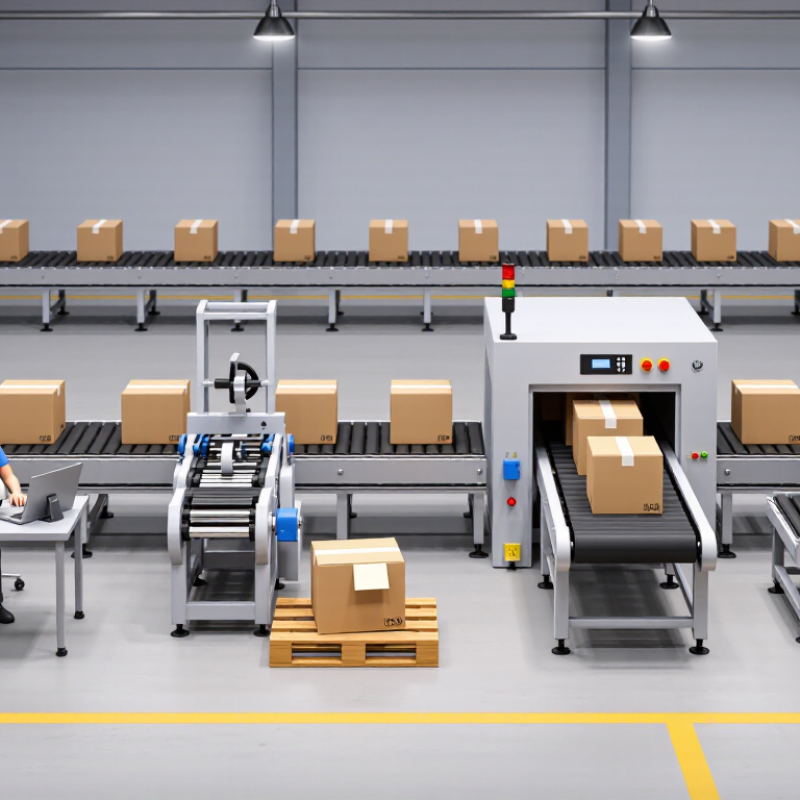
Tape machines for boxes are packaging tools that apply and press adhesive tape over carton seams. They replace repeated hand sealing with controlled, repeatable motion. A typical machine folds flaps, centers the carton, applies tape, and cuts it cleanly. Some models seal the top only. Others seal both top and bottom. Semi-automatic machines suit changing box sizes, while fully automatic machines work better on steady production lines. The right choice depends on carton dimensions, tape width, line speed, and operator involvement.
Industry data supports this shift toward automation. MHI’s 2024 Annual Industry Report found that 55% of supply chain leaders planned to increase technology investment. The report also stated that 74% expected to adopt robotics or automation within one to two years. These figures do not make every tape machine necessary. A small warehouse may lose money through over-automation. That is an easy mistake.
Tips: Measure real cartons before selecting equipment. Test empty and filled boxes. Watch for crushed corners, loose tape, and uneven flap pressure. Confirm whether recycled corrugated board runs smoothly, because rough surfaces can reduce adhesion. Keep the tape head clean and replace worn blades promptly. PMMI reports that labor availability remains a continuing concern for packaging operations, so simple controls and quick changeovers matter. From practical testing, speed ratings can also mislead. A machine may seal 30 cases per minute, but mixed box sizes usually reduce that rate. Error logs reveal the truth.
Box tape machines differ mainly in automation level and production speed. Manual dispensers are suitable for low-volume packing, while semi-automatic and fully automatic case sealers are designed for faster, more consistent carton closing. The ranges shown represent typical operating throughput in boxes per minute and can vary with carton size, tape application, and operator workflow.
A box tape machine seals cartons by moving tape across a prepared seam and pressing it firmly onto the board. On a semi-automatic line, an operator folds the flaps and guides the carton into the machine. Side belts carry it forward. Folding rails hold the top flaps in place, while an applicator head feeds tape over the center seam. Wiping rollers smooth the tape onto the carton, helping reduce loose edges and wrinkles.
Automatic machines add sensors and powered flap folders, so cartons can pass through with less manual handling. Some models adjust to different box sizes; fixed-size machines need more careful setup. The U.S. Census Bureau reported 2023 retail e-commerce sales of $1.1187 trillion, underlining the volume of goods that depend on secure carton closure. That figure does not measure tape-machine performance, though. A faster cycle can still produce poor seals if cartons are dusty, overloaded, or misaligned.
Tips: Keep the tape path clean and check roller pressure during shift changes. Run a few cartons after each adjustment. Inspect the bottom seam, too. It is easy to overlook. Even a good setup can drift, so record recurring jams and seal defects rather than assuming every carton is identical.
Main Types of Box Tape Machines
Box tape machines range from handheld dispensers to fully automatic case sealers. Handheld tools suit low-volume packing and varied box sizes, but sealing can become tiring during long shifts. Semi-automatic machines guide cartons through powered tape heads; an operator still feeds and removes each box. They offer a practical middle ground. Automatic uniform-case sealers fold flaps and apply tape with less handling, while random-case machines adjust to different carton sizes. Top-and-bottom tape heads seal both seams in one pass; side-belt designs help move taller or heavier cartons steadily.
Selection should reflect carton dimensions, daily volume, tape width, and available floor space. A machine that runs quickly may still slow a line if boxes need frequent adjustment. Grand View Research valued the global packaging machinery market at $46.87 billion in 2022 and forecast a 5.3% compound annual growth rate from 2023 to 2030. This broad market figure is not specific to tape machines, but it signals continued investment in packaging equipment. Before buying, test the machine with actual cartons and tape. Small differences in board stiffness or flap alignment can affect sealing quality. There is no perfect fit.
Manual, semi-automatic, and automatic tape machines differ most in adjustment, throughput, and operator involvement. Manual units suit short runs and changing carton sizes, but workers must fold flaps and apply each box. Semi-automatic machines seal one carton at a time, reducing repetitive hand work while requiring an operator to feed boxes. Automatic machines use sensors and powered adjustments to handle continuous lines with less intervention. They usually need more floor space and careful setup. Faster is not always better.
Pitney Bowes’ 2023 Parcel Shipping Index reported 21.2 billion U.S. parcels in 2022. That volume helps explain why consistent carton closure matters in busy packing operations. Yet parcel growth alone does not determine the right machine. Check carton size variation, line speed, tape width, and how quickly staff can clear jams. A machine that handles your largest box may still perform poorly with light, narrow cartons. Real floors are messier.
Tips: Test several actual cartons, including dusty or partly filled ones. Watch for flap lift, skewed tape, and difficult changeovers. Record boxes per minute during a full shift, not just a short demonstration. Manual adjustment can be a sensible choice for mixed, low-volume work; automatic adjustment pays off when carton flow is steady. Even a good test can miss seasonal bottlenecks.
Choosing a tape machine starts with your cartons, not the machine’s appearance. Record each box’s length, width, height, weight, and board quality. Measure the cartons. A random case sealer works well when box sizes change frequently. An operator adjusts the guides, then feeds each carton through the sealing area. Semi-automatic machines offer steadier output for regular packaging work. Fully automatic models suit higher volumes and can connect with conveyor systems.
Check the tape width, core size, adhesive type, and application temperature. Recycled corrugated board may contain loose fibers or dust, so adhesion should be tested before purchase. A tape machine must handle your busiest production period, not only the daily average. Review the minimum and maximum carton sizes carefully. Many buyers overlook this detail. Safety guards, emergency stops, adjustable side belts, and clear access for cleaning also matter. A compact machine saves floor space, but cramped maintenance access can slow repairs.
Run your own sample cartons through the machine. Watch for crooked tape, open flaps, crushed corners, and repeated jams. Record the sealing speed and the operator’s adjustment time. Ask for technical documents, maintenance intervals, spare-part availability, and training details. Check whether the machine needs compressed air or special electrical service. Some cartons will still need hand adjustment. That may be acceptable when box dimensions vary widely. The best choice often comes from a practical trial, not a polished sales specification.
Side belts move the carton forward. An applicator head places tape over the center seam. Wiping rollers press it flat.
The operator folds the flaps, guides the carton inside, and removes it after sealing. The machine handles tape application.
Sensors and powered folders reduce manual handling. Some models adjust to different carton sizes during continuous packing.
A handheld dispenser or semi-automatic machine may work well. They handle varied box sizes without complex setup.
It suits steady carton flow, repeated sizes, and higher volumes. It needs more floor space and careful adjustment.
Dust, overfilled cartons, misaligned flaps, and weak board can reduce adhesion. A fast cycle cannot fix bad preparation.
Keep the tape path clean. Check roller pressure and watch for loose edges, wrinkles, skewed tape, and flap lift.
Yes. It is easy to overlook. A carton may look secure above while its lower seam remains weak.
Test actual cartons with the intended tape. Include dusty, partly filled, narrow, heavy, and different-sized boxes.
No. Frequent adjustments or jams can slow the whole line. A slower machine may perform better in messy, mixed work.
A Tape Machine For Boxes is a packaging device designed to apply adhesive tape quickly, evenly, and securely to cartons. It can improve packing speed, reduce material waste, and create consistent seals compared with manual taping. These machines generally guide the box through a sealing area, where tape is dispensed, pressed onto the carton, and cut to the required length. Depending on the application, operators may use manual, semi-automatic, or fully automatic models.
The main types include top-sealing machines, top-and-bottom sealing machines, case formers with integrated taping functions, and compact units for lower-volume operations. Important differences include sealing speed, box-size range, tape compatibility, adjustment methods, durability, safety features, and maintenance requirements. To choose the right machine, businesses should consider carton dimensions, daily packaging volume, available workspace, desired automation level, and budget. A suitable machine should provide reliable sealing performance while remaining easy to operate, adjust, and maintain.

Huisu Smart