Choosing a Box Taping Machine begins with a simple question: where does packaging slow down?
In a busy warehouse, workers fold cartons, pull tape, cut tape, and press each seal by hand. The process looks manageable at first. Then orders increase. Tape edges lift. Boxes leave unevenly sealed. Small mistakes become expensive returns. A Box Taping Machine can bring consistent pressure, cleaner tape placement, and a steadier packing rhythm. It can also reduce repetitive wrist movements during long shifts. That practical benefit matters more than impressive speed claims.
Jorge Izquierdo, a packaging automation specialist associated with PMMI, offers a useful principle: “Automation should solve a real production problem, not decorate the factory floor.” The point is worth considering. A machine should match carton sizes, tape specifications, line speed, and available floor space. It should also support safe operation and straightforward maintenance. Some businesses may need a fully automatic model. Others may gain more from a semi-automatic system.
The choice is not always obvious.
A strong evaluation includes daily box volume, carton variation, sealing quality, operator training, and service access. Watch the machine run with your actual cartons. Listen for unusual noise. Check whether adjustments feel simple or frustrating. Energy use and spare-part availability deserve attention too. Buyers sometimes focus only on output per minute. That is an incomplete measure. A fast machine that stops often can disrupt an entire line.
This guide explores why companies choose a Box Taping Machine, where it creates measurable value, and when it may not be the right investment. The honest answer may involve compromises. That is part of making a reliable packaging decision.
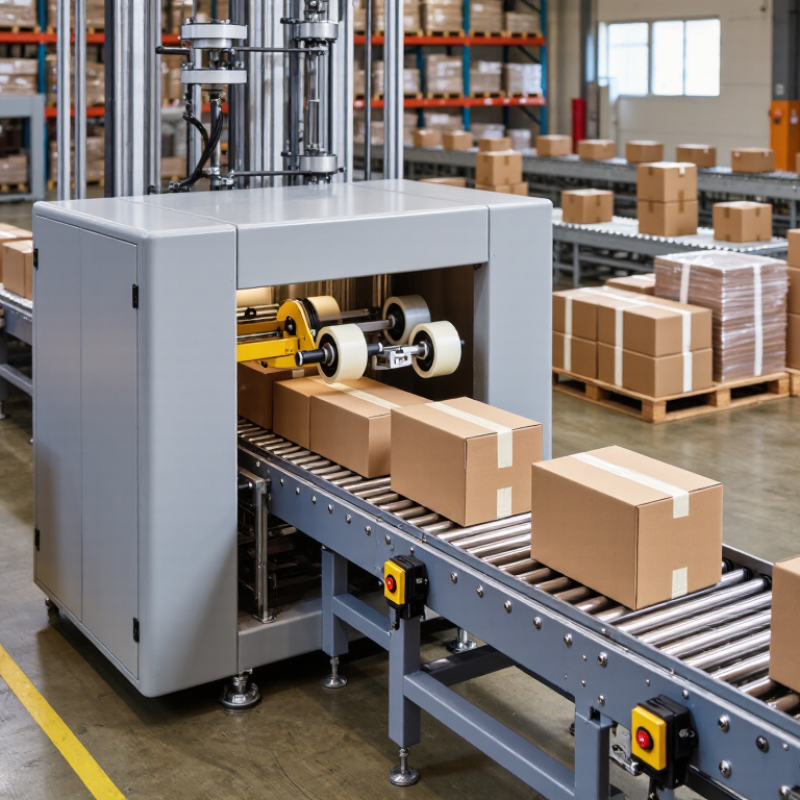
A box taping machine is packaging equipment that closes cartons with pressure-sensitive adhesive tape. It guides each box through belts or rollers. Tape heads apply, press, and cut the tape along the carton seams. Simple in appearance. Precise in operation.
In a working packing line, an operator places a filled carton on the conveyor. Sensors detect its height and position. The machine adjusts its side belts, carries the box forward, and seals the top flaps evenly. Some models seal the bottom as well, while others require a pre-closed base.
This difference matters when planning labor and floor space. A reliable setup should match carton sizes, tape width, production speed, and product weight.
The machine does not replace good packaging decisions. Weak cartons can bend under pressure, and dusty surfaces may reduce tape adhesion. I have seen operators blame the sealer when the real problem was an overloaded box. That assumption is wrong.
Regular checks should include tape tension, blade condition, belt alignment, and seal placement. A short trial with real cartons often reveals issues that specifications miss.
The fit is not always perfect. An adjustable machine may handle several box sizes, but frequent size changes can still slow production and require careful settings.
A box taping machine turns a partly formed carton into a sealed shipping unit through a controlled sequence. The operator places the filled box onto powered conveyor belts. Side belts stabilize its walls, while upper belts press the top flaps into position. A sensor detects the carton’s leading edge. Then, the tape head unwinds adhesive tape, presses it across the center seam, and cuts it cleanly at the rear edge. Some systems seal the bottom and top in one pass.
The process looks simple. It is not always simple. Tape tension, box height, flap alignment, and conveyor speed must work together. If the carton is overfilled, the flaps may rise like a small roof. The tape can wrinkle or lose contact. In real production, the first adjustment is rarely perfect. Operators still need to inspect seals, clean rollers, and check worn blades.
Industry data explains the interest in this equipment. PMMI’s 2023 State of the Industry report valued U.S. packaging machinery shipments at about 10.2 billion dollars in 2022. The report also identified labor availability and automation as important investment drivers. A box taping machine can create more consistent seals and reduce repetitive hand movements. However, speed alone is not enough. A practical setup should match carton sizes, tape specifications, and required throughput. Otherwise, automation may simply produce mistakes faster.
Nominal carton-sealing throughput by packaging method
A box taping machine guides the carton, folds the flaps, applies pressure-sensitive tape to the center seam, and cuts the tape automatically. This reduces repetitive manual work and creates a more consistent seal.
The chart uses nominal cycle-time benchmarks: 45 seconds for manual sealing, 20 seconds for semi-automatic sealing, and 10 seconds for automatic sealing. Throughput is calculated as 3,600 seconds divided by the nominal cycle time; actual results vary with carton size, operator handling, tape changes, and machine settings.
Automated box taping provides faster, more consistent packaging with less manual effort. A machine applies tape at a steady pressure and position. This creates cleaner seals and reduces loose flaps, especially during busy shipping periods. Operators can also spend less time bending, reaching, and repeating the same motion.
The 2024 MHI Annual Industry Report found that 83% of supply chain professionals view technology as a competitive advantage. That figure supports wider automation planning, including case sealing. A box taping machine can improve line speed, reduce tape waste, and produce more predictable labor costs. However, results depend on box sizes, board quality, and maintenance. The investment may disappoint if cartons arrive crushed or vary greatly in dimensions. Real production is less perfect than a sales sheet suggests.
Tips: Measure your carton range before choosing equipment. Test damaged, lightweight, and overfilled boxes. Keep rollers, belts, and tape heads clean. The 2023 U.S. Bureau of Labor Statistics data recorded 5.5 million nonfatal workplace injuries and illnesses among private-industry workers. Safer, less repetitive packaging tasks may support better working conditions, but machine guarding and operator training remain essential. Track seal failures, tape consumption, and cartons per hour for thirty days. Data often reveals problems that speed alone hides.
| Performance Dimension | Manual Box Taping | Automated Box Taping | Practical Packaging Benefit |
|---|---|---|---|
| Typical Throughput | Approximately 4–10 boxes per minute, depending on box size, tape application, and operator experience. | Commonly approximately 15–30 boxes per minute for standard case-sealing operations. | Higher and more consistent output helps packaging lines handle larger daily order volumes. |
| Tape Application Consistency | Tape position, length, and pressure can vary from one box to another. | Preset tape length, centered application, and controlled pressure provide more uniform seals. | Consistent sealing improves package appearance and reduces the risk of loose or incomplete closures. |
| Labor Requirement | A worker normally folds flaps, applies tape, and checks the finished closure. | A worker generally loads or guides cartons while the machine folds and seals them. | The same workforce can often support greater output, while repetitive taping work is reduced. |
| Tape Usage Control | Tape consumption may increase because of excessive overlap, uneven cuts, or rework. | Controlled dispensing and repeatable tape cuts help minimize unnecessary tape use. | Better material control can reduce packaging waste and improve cost predictability. |
| Seal Quality | Seal quality depends heavily on operator technique and carton alignment. | Consistent pressure and alignment support repeatable top and bottom seals. | Reliable seals help protect products during handling, storage, and transportation. |
| Operator Ergonomics | Frequent hand movements, bending, cutting, and repetitive taping may contribute to fatigue. | The machine performs the repetitive sealing motion, although loading and monitoring are still required. | Reduced repetitive strain can improve workplace comfort and support more sustainable production. |
| Changeover Flexibility | Different carton sizes can usually be handled immediately with minimal adjustment. | Machines may require width, height, guide, or tape-head adjustments when carton dimensions change. | Automation is most effective when carton sizes are standardized or produced in planned batches. |
| Quality Inspection | The operator visually checks each package during taping. | The machine provides repeatable sealing, while operators or downstream systems inspect alignment and carton condition. | A standardized process makes quality problems easier to identify and correct. |
| Integration Potential | Usually operates as a standalone activity. | Can be positioned within a packaging line alongside carton forming, filling, labeling, weighing, and conveying equipment. | Line integration can reduce handling between stages and support a smoother material flow. |
| Best-Fit Operating Conditions | Suitable for low-volume production, frequent size changes, prototypes, and highly variable orders. | Suitable for medium- to high-volume operations with repeatable carton sizes and steady production demand. | Choosing the right method helps balance equipment investment, flexibility, labor, and required output. |
Note: Throughput figures are typical operating ranges for standard carton-sealing workflows. Actual performance depends on carton dimensions, board quality, tape width, machine configuration, operator loading speed, and line layout.
Box taping machines differ by carton size, production speed, and operator involvement. Manual machines suit small warehouses with changing box dimensions. An operator folds the flaps, places the carton, and applies tape by hand or with a simple dispenser. They cost less, but output depends heavily on worker pace and accuracy.
Semi-automatic machines need an operator to position and close each carton. The machine then seals the top and bottom flaps with consistent pressure. They work well for moderate production, such as packing 300 to 600 cartons per hour. Automatic case sealers connect to conveyors and adjust carton height with limited manual input. They are useful for steady, high-volume lines.
Uniform case sealers handle cartons with similar dimensions. Random case sealers adjust to different widths and heights during operation. Side-belt models grip taller or heavier cartons securely, while top-and-bottom belt models seal common shipping boxes quickly. Some systems use adhesive tape heads with adjustable cutting and tension controls.
In practice, the wrong machine creates waste. I have seen loose flaps caused by poor tape tension, not weak cartons. Dusty rollers can also reduce grip. Check carton sizes, tape width, hourly volume, and available floor space before purchasing. Allow room for maintenance. That detail is often missed. A reliable selection should match real packaging conditions, not only the fastest advertised speed.
Choosing the right box taping machine begins with the carton, not the machine. Measure box length, width, height, and weight during a normal production day. Cartons should enter squarely, with flaps aligned and surfaces reasonably clean. A machine sized only for today’s smallest box may become a bottleneck after one product change. Check the required tape width, roll diameter, and sealing speed. Faster is not always better. In my experience, stable feeding often matters more than impressive cycle numbers.
Study the workspace before comparing specifications. Leave room for operators to load cartons, remove sealed boxes, and clear tape jams safely. Conveyor height should match nearby equipment, or workers may twist repeatedly during long shifts. Ask whether the machine handles different carton sizes without lengthy adjustments. Tool-free guides and clear controls can reduce training time, although they cannot remove every mistake. Request a trial with your actual boxes and tape. A clean showroom test can hide crushed corners, dusty surfaces, or weak seals.
Reliability depends on construction, maintenance access, and technical support. Inspect drive belts, rollers, sensors, and guarding during a demonstration. Replacement parts should be identifiable, with lubrication points easy to reach. Record seal quality at startup, after several hours, and when tape rolls change. This reveals problems a short test misses. Do not select equipment from speed alone. Energy use, noise, operator comfort, and service costs deserve equal attention. I would keep a small adjustment log. It seems unnecessary, but it may expose recurring setup errors.
It closes cartons with pressure-sensitive adhesive tape. Belts or rollers guide each box through the sealing area.
Side belts stabilize the box. Upper belts press the flaps down. A tape head applies, presses, and cuts the tape.
Some machines seal the top and bottom in one pass. Others seal only the top and need a pre-closed base.
Check carton height, width, weight, tape size, and required speed. These details affect machine fit and performance.
Dusty surfaces can reduce adhesion. Overfilled cartons may lift the flaps like a small roof. Weak cartons can also bend.
Check tape tension, blade sharpness, belt alignment, roller cleanliness, and seal placement. Small faults can spread quickly.
Usually, it can handle several sizes. Frequent changes may still slow production and require careful adjustments.
No. It can create consistent seals and reduce repetitive hand movements. Poor settings may produce mistakes faster.
Run a short trial with real cartons. Watch the seals, flap alignment, and conveyor movement. Specifications alone can miss problems.
Blaming the machine too quickly. The carton may be overloaded, poorly formed, or too dusty. The fit is not always perfect.
A Box Taping Machine is an automated packaging system designed to seal carton flaps efficiently with adhesive tape. It guides each box through a controlled taping process, applying consistent pressure and positioning the tape securely along the top, bottom, or both surfaces. Compared with manual sealing, automated box taping can improve productivity, create a more uniform appearance, reduce material waste, and lower the physical effort required from workers.
Different types of box taping machines are available to suit various packaging needs, including adjustable systems for mixed box sizes, machines for fixed-size cartons, and models that seal one or both sides. When choosing the right Box Taping Machine, businesses should consider carton dimensions, production speed, tape specifications, available workspace, operating requirements, and future packaging capacity. A suitable machine should provide reliable performance, simple adjustments, safe operation, and easy maintenance while matching the company’s workflow and packaging goals.

Huisu Smart